Amsterdam Airport problems today mostly start at passport control, not at security lanes and not with strikes. The EU Entry/Exit System became mandatory on 10 April 2026, and its queues land hardest on early-morning long-haul arrivals, roughly 06:00 to 10:00. Security screening, which caused May's chaos, has largely settled since.
Checked 30 July 2026. Built from Schiphol's published travel advice, the airline-industry letter sent to the European Commission on 1 July 2026, and the EU261 revision agreed by EU lawmakers on 15 June 2026.
Status, end of July 2026. No strike is under way. Passport control runs in minutes on a normal afternoon. Airlines have warned that first-time biometric registration can stretch non-EU passport queues to several hours during the morning peak. Schiphol has 161 self-service EES kiosks in place plus extra Marechaussee desks. The airport asks for two hours ahead of a Schengen flight, three for non-Schengen.
How do you check whether Amsterdam Airport has problems right now?
Check three things, in this order: your own flight, then the airport-wide boards, then the border queue.
Start with your flight: airlines decide cancellations, and their app shows it before any board does. Then scan live arrivals or departures to see whether trouble is yours alone or airport-wide. Fifteen cancellations spread across carriers means a systemic problem; one cancellation on your route usually means an aircraft or crew issue.
Then look at border control, which boards never show. Queue-time trackers and Schiphol's own alerts cover this.
One rule covers most of it. Flight on time but queues long? The risk is you, not the aircraft. Leave earlier. If it reads Cancelled, stop watching boards and call the airline. Seats on the next service go in the order people ask.
Is there a strike at Amsterdam Airport today?
Almost certainly not. Dutch airport strikes are announced days ahead by unions and national press. No news of one means no walkout today.
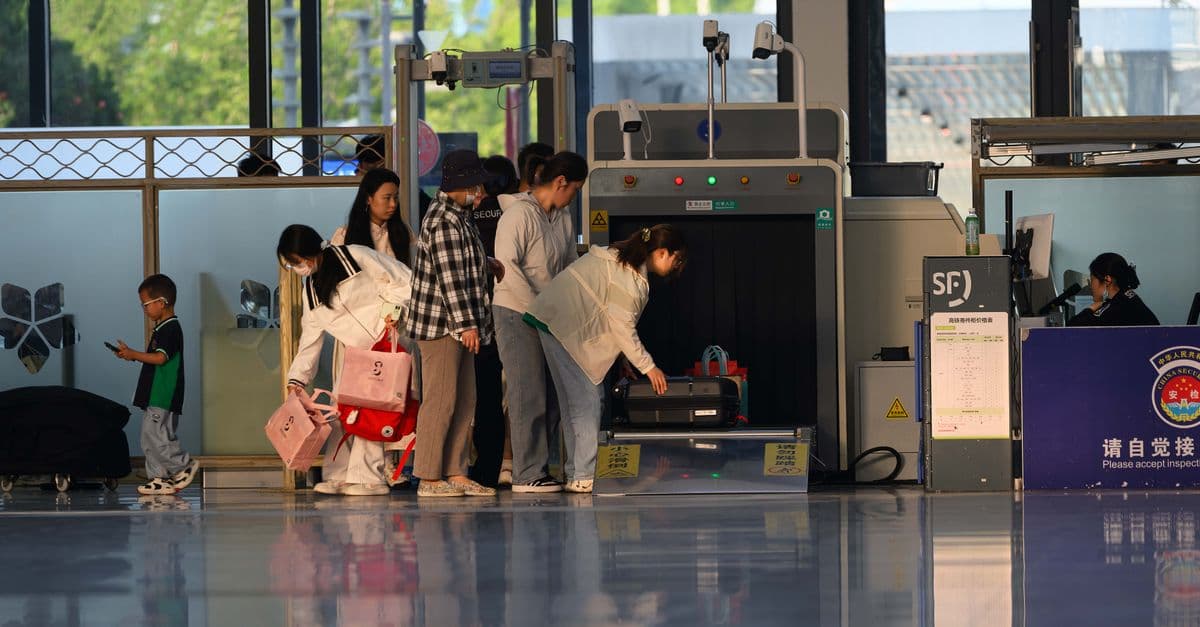
What people remember is not actually a strike. On 18 and 19 May 2026 Schiphol moved security screening from five contractors to three under a ten-year contract worth about EUR 6 billion. Nearly half of some 5,000 guards changed employer in the handover. On the first day 279 of 679 departing flights ran late, waits jumped to 30–60 minutes against a norm near 10, and passengers missed flights outright. Unions FNV, CNV and De Unie later threatened action against contractor I-SEC over rosters, which kept the word "strike" in circulation.
Telling them apart matters when you plan. A strike hits check-in and security across every airline at once, with cancellations published a day ahead. Understaffing produces long lines but a normal flight schedule.
Why are flights delayed at Schiphol in 2026?
Four causes account for most of it, and they behave differently.
| Cause | Who it hits | What it costs you | Status, July 2026 |
|---|---|---|---|
| EES biometric registration | Non-EU/Schengen passports, arrivals and departures | Up to several hours at the 06:00–10:00 peak | Live since 10 April 2026; 161 kiosks added |
| May security handover | Everyone departing | 30–60 min waits at the worst point in May | Largely settled; rosters still disputed |
| Peak-season volume | Everyone, weekends worst | 20–40 min added to every step | Runs to early September |
| Weather and European ATC | Specific routes | Delays and diversions, rarely cancellations | Day by day |
Plan around the border, not the season: registration is structural. ACI EUROPE, Airlines for Europe and IATA wrote jointly to Commission President Ursula von der Leyen on 1 July 2026 saying the rollout had reached a critical point across the bloc. DutchReview warned Dutch travellers on 6 July 2026 to expect longer passport queues all summer.
There is one piece of good news buried in it. Registration is a one-off. Once your face, fingerprints and passport are on file, that record stands for up to three years. Later trips through any EU external border move faster. Our EES and ETIAS guide covers who is affected and what the checks involve, and the security queue guide has current arrival timings by traveller type.
What is the difference between a cancelled, delayed and diverted flight?
Three words, three different responses from you.
Cancelled means the flight will not operate at all. Your airline owes you a choice between re-routing and a refund, plus compensation in many cases. Claim the seat you want before other passengers do.
Delayed means the same aircraft still flies, later. You keep your seat, and your rights depend on how late you finally arrive, not on how late you departed.
Diverted means the aircraft lands elsewhere, often Rotterdam, Eindhoven or Brussels. Your airline must still get you to Amsterdam, usually by coach. That transfer counts toward your total arrival delay.
One detail catches people out. Compensation for a delay is calculated on arrival time at your final destination, so a two-hour departure delay that makes you miss a connection and land five hours late is treated as a five-hour delay.
What can you claim if your Amsterdam flight is cancelled or delayed?
Regulation EC 261/2004 sets fixed amounts, and they depend on distance rather than ticket price.
| Flight distance | Compensation | Applies to |
|---|---|---|
| Up to 1,500 km | EUR 250 | AMS-London (357 km), AMS-Rome (1,297 km), AMS-Madrid (1,461 km) |
| Over 1,500 km within the EU, or 1,500–3,500 km on any route | EUR 400 | AMS-Athens (2,182 km), AMS-Lisbon (1,847 km), AMS-Istanbul (2,184 km) |
| Over 3,500 km outside the EU | EUR 600 | AMS-New York, AMS-Dubai, AMS-Singapore |
Distance is measured great-circle from departure to your final destination, which puts more routes in the lowest band than travellers expect. Amsterdam to Rome is 1,297 km and Amsterdam to Madrid 1,461 km, so both pay EUR 250 rather than EUR 400. Sicily crosses the line: Catania is 1,835 km, which does pay EUR 400.
Three conditions decide whether you are owed anything. You must land at your final destination three or more hours late. The flight must leave an EU airport, or reach the EU on an EU carrier. And the cause must sit within the airline's control. Strikes by the airline's own staff and technical faults usually count as within its control. Weather, air-traffic control restrictions and border-police queues normally do not, which is why EES delays rarely produce payouts.
Two rights apply regardless of compensation: care while you wait, meaning food, drinks and a hotel if you are stuck overnight, and a choice between the next available re-routing or a full refund. Airlines may halve payouts if their replacement flight lands you within two to four hours of schedule, depending on distance.
Worth knowing if you have read about EU261 being weakened: on 15 June 2026 the European Parliament and Council agreed the first full revision of the regulation since 2004, and it keeps the three-hour threshold and the EUR 250/400/600 grid. The revised text still needs formal adoption and applies twelve months after publication, so realistically the second half of 2027. Until then the 2004 rules stand exactly as above.
What should you do in the first thirty minutes after a cancellation?
Chase the seat first, paperwork second.
- Open the airline app and take the re-routing it offers, or call while you walk to the desk. App and phone both beat queueing.
- Photograph the departure board showing your flight and the notification you received. Claims get refused for want of proof months later.
- Ask specifically for a seat on another carrier if your airline's next service is more than a few hours out. Under EC 261 re-routing must be at the earliest opportunity available, not merely the earliest on that airline.
- Keep receipts for meals and transport. Care is owed while you wait, and reimbursement is easier than arguing about it afterwards.
- File the compensation claim after you travel, in writing, quoting the flight number, date and your arrival delay.
What if you miss a connection at Schiphol?
Go to your airline's transfer desk rather than out through passport control, and do it before the gate closes on the next option.
Schiphol runs as one terminal with three departure halls, so transfers happen airside and you rarely need to re-enter the country. The exceptions: non-EU documents combined with a terminal change at another airport, or a separate ticket for the second leg.
That last point is the expensive one. On a single booking the airline rebooks you free and compensation is judged on your final arrival time. On two separate tickets, the second airline owes you nothing, and a missed leg is your loss. If your connection at Amsterdam is under two hours and you are travelling on a non-EU passport this summer, treat the border queue as the real risk and consider a later second leg.
How we checked this
Every number above carries a named source and a date, so you can re-check it yourself:
- Border rules and kiosk count: Schiphol's published EES pages and travel advice, read 30 July 2026.
- Queue expectations: the joint letter from ACI EUROPE, Airlines for Europe and IATA to Commission President Ursula von der Leyen, 1 July 2026, plus DutchReview's summer warning of 6 July 2026.
- May security handover: Dutch press reporting from 18–19 May 2026 on the five-to-three contractor switch and the delays that followed.
- Compensation rules: Regulation EC 261/2004 itself, and the political agreement of 15 June 2026 between the European Parliament and Council that revises it.
- ETIAS timing: Euronews, 8 July 2026.
Anything time-sensitive carries its own date in the text. If you spot something stale, the fastest cross-check is Schiphol's own alerts page and your airline's app.
Frequently asked questions
Is Amsterdam Airport delayed today?
Individual flights are always delayed somewhere. For airport-wide trouble, compare the boards against your own flight: many cancellations across different airlines means a systemic problem, while one is routine.
How early should I arrive at Schiphol right now?
Two hours ahead of Schengen departures, three for non-Schengen, on Schiphol's own advice. Add an hour for non-EU passport holders in the 06:00–10:00 peak, when registration is slowest.
Are flights cancelled because of the EES queues?
Rarely. Passport control slows people, not aircraft. The usual outcome is passengers missing flights that departed on time, which is not a cancellation and carries no compensation.
Can I claim compensation for an EES border delay?
Normally no. Border control is run by the Marechaussee rather than your airline, so it falls outside the airline's control under EC 261/2004.
Has ETIAS started yet?
No. Euronews reported on 8 July 2026 that the launch has slipped into 2027 after the EES rollout, so no travel authorisation is required for now. EES registration at the border is the only new step this summer.