Schiphol is working through a rough patch, and it shows at the checkpoints. A major security contractor overhaul and the EU's new Entry/Exit System have combined into bottlenecks far beyond the airport's historical norms. If you are departing from or connecting through Amsterdam this summer, your arrival strategy needs an update.
The airport expects well over 13 million travellers this summer, a load that presses hard on systems still settling after structural change. Understanding what exactly causes the delays lets you plan with precision rather than panic. This guide lays out the verified facts and practical timing recommendations for Schiphol in 2026.
Update — late July 2026: EES is now the main driver, and security has largely stabilised
The May security-contractor switch has settled down; the bigger variable now is the EU Entry/Exit System (EES), mandatory since 10 April 2026. Schiphol is one of the better-prepared airports — it has installed 161 self-service EES kiosks plus extra Marechaussee (border-police) desks — and on a normal afternoon passport control runs in minutes. The pinch point is the early-morning long-haul wave (roughly 6–10am): airlines have warned that first-time biometric registration can push non-EU passport queues to several hours at peak this summer.
Three things worth knowing before you plan your arrival time:
- Schiphol’s own guidance: be at the airport 2 hours before a Schengen flight and 3 hours before a non-Schengen departure. Add buffer on top if you are connecting — Schiphol is connection-heavy, so a slow border cascades into missed onward flights.
- EES is a one-off cost: once your passport, face and fingerprints are registered, the record is kept for up to three years — your next trips through any EU external border should be noticeably faster.
- EU passports are not exempt in practice: formally nothing changed for EU/Dutch passports, but when the non-EU kiosks clog, staff get pulled across to help — which can mean fewer lanes open for everyone.
See our EES & ETIAS guide for how the checks work and who is affected (ETIAS itself is now expected in 2027).
What Changed in May 2026 and Why Queues Got Longer
The primary driver of longer waits is a fundamental restructuring of security screening. On 18 and 19 May 2026, Schiphol switched its screening operations from five contractors to three under a new ten-year contract worth roughly EUR 6 billion. The consolidation was meant to simplify operations. The launch did the opposite.
Nearly half of the roughly 5,000 security guards moved to a new employer during the switch. On the first day, 279 of 679 departing flights were delayed and hundreds of passengers missed their flights outright. Waits at security surged to 30-60 minutes and beyond, against the airport's usual norm of about 10 minutes.
The airport attributed the chaos to unexpected understaffing and IT problems that slowed the new contractors down. Unions FNV, CNV and De Unie have since threatened action against security contractor I-SEC over work schedules, adding uncertainty to staffing levels. The system has stabilised somewhat since launch, but the underlying strain has not gone away.
What That Means at the Checkpoint
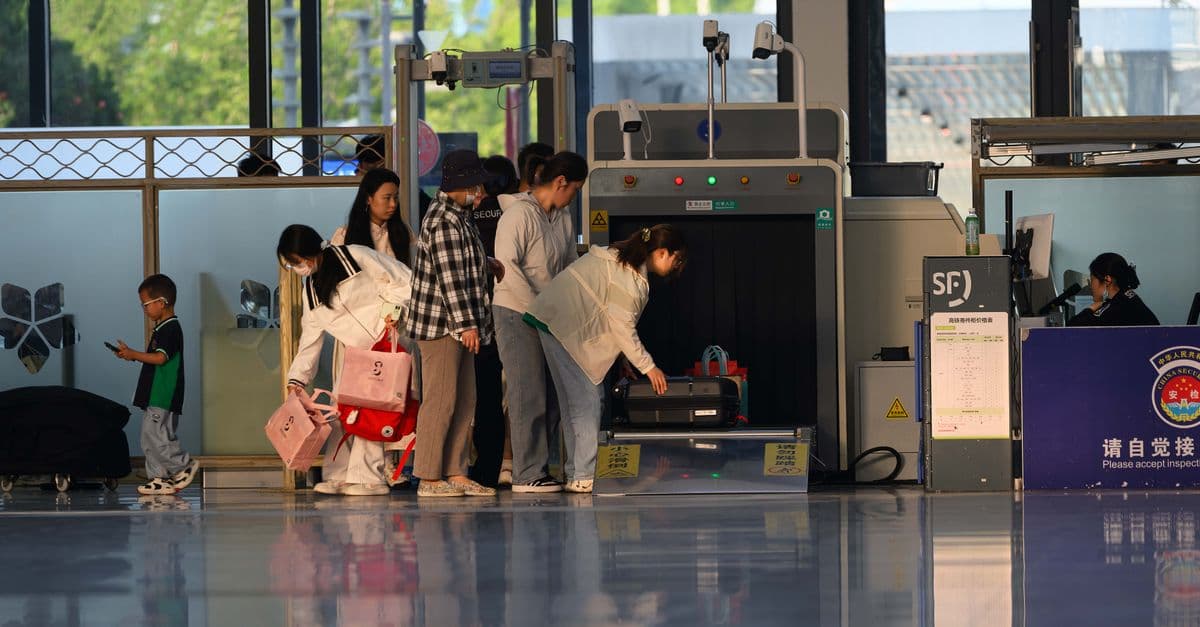
Fewer contractors were supposed to mean one unified security standard. On the ground it has meant staff adapting to new protocols and new technology at the same time. The learning curve shows up as slower throughput at the scanners and manual checks. A passage that used to take five minutes is now a much more deliberate process.
How Bad Is It Right Now? The Numbers
The disruption has not simply faded with time. On 10 June 2026, Schiphol recorded 255 delayed and 20 cancelled flights. On 30 June 2026 it was worse: 432 delays and 32 cancellations in a single day. The strain is intensifying just as summer volume builds towards its peak.
Separately, the EU Entry/Exit System (EES), operational since 10 April 2026, adds biometric border checks for non-EU travellers. Schiphol is among the EU airports reporting the longest EES waits: at peak times, border queues of two to four hours have been reported. If you are flying to or from a destination outside the Schengen area, this queue is on top of security, not instead of it. Our EES and ETIAS guide explains the registration step by step.
How Early Should You Arrive? (By Traveller Type)
The standard advice to arrive two hours before a flight is not enough for many passengers right now. The table below gives concrete arrival guidance by travel profile. These times are deliberately conservative: the goal is a buffer against queue swings you cannot control.
| Traveller profile | Arrive before departure | Why |
|---|---|---|
| Schengen flight, hand luggage only | 2.5 hours | Security queues only, no border control |
| Schengen flight, checked bags | 3 hours | Bag-drop queues plus security |
| Non-Schengen flight, EES already registered | 3.5 hours | Security plus border control |
| Non-Schengen flight, first EES registration | 4-4.5 hours | First biometric registration is the slowest step, and border peaks reach 2-4 hours |
| Transfer passenger | 2+ hours connection | Crossing the Schengen border in transit means EES checks; short connections are risky |
Travelling with children or with assistance needs? Add another 30 minutes. The recommendations assume normal operations; on a strike day, all bets are off.
Why These Times Are Necessary
The spread reflects the different bottlenecks each profile faces. Schengen passengers only contend with security. Non-Schengen passengers face security plus the EES border check, and a first-time EES registration takes noticeably longer than later trips, because the system captures your fingerprints and photo. Staff are still mastering the new setup, which slows everything further at peaks.
Practical Tips to Get Through Faster
You cannot control staffing or scanner speed. You can control your own readiness, and it saves real minutes.
Book or choose off-peak departures where possible: very early and late flights generally face shorter queues than the midday wave. Check crowd forecasts on the Schiphol website or app before you choose. Complete online check-in the day before, so you skip the check-in desks and go straight to bag drop or security.
At the checkpoint, be ready before the belt: laptop and large electronics accessible, liquids following the rules (Schiphol's CT scanners let you keep items in the bag, but the 100 ml limit still applies; see our hand-baggage liquids guide). Skip bulky metal jewellery and belts that trigger extra checks. Keep your passport in hand, open at the photo page, before you reach the front of the border queue.
If the Technology Fails
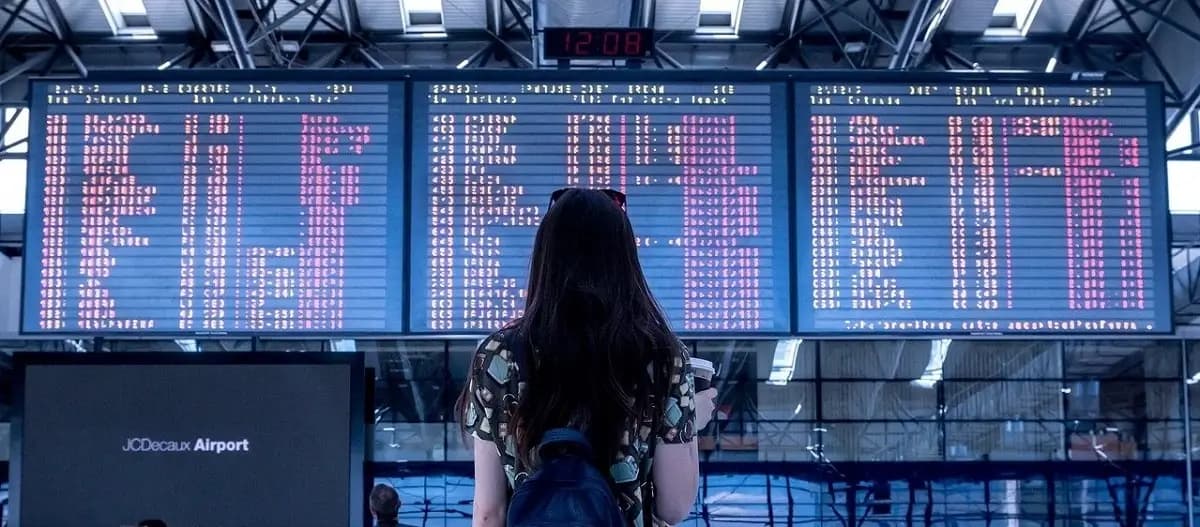
Scanner failures are a known risk with the new EES kiosks. When a biometric scan fails, staff switch to manual processing, which is much slower. There is little you can do beyond keeping your documents ready and your photo page clean, and building the buffer into your arrival time. For gate planning, check the live departures board before you leave for the airport.
Your Rights When Flights Are Delayed or Cancelled
Under EU Regulation 261/2004, if your flight arrives three or more hours late, or is cancelled at short notice, you may be entitled to compensation of EUR 250 to EUR 600 depending on flight distance. Regardless of compensation, the airline owes you care during a long delay: meals, refreshments, hotel accommodation if you are stranded overnight, and rebooking or a refund.
Two honest caveats. First, compensation applies only when the cause is within the airline's control; airport-wide security disruption is often treated as an extraordinary circumstance, so compensation for those specific delays is not guaranteed, and it is decided case by case. The care obligations, however, apply either way. Second, and this matters at Schiphol right now: if you miss your flight because you were stuck in the security or border queue, EU261 does not cover you, because the flight itself departed on time. That is exactly why the arrival-time table above is conservative.
Claiming in Practice
Keep your boarding passes and receipts for any expenses. If your flight is cancelled, ask the airline for rebooking or a refund on the spot. If a claim is refused and you believe the cause was within the airline's control, you can pursue it directly with the airline or through the national enforcement body in the Netherlands.
Schiphol Queue Status: Late August 2026
Verified as of 26 August 2026:
Security: the action unions threatened in early summer has begun. Staff held three fifteen-minute stoppages on 25 August and five on 26 August, at 10:00, 12:00, 14:00, 16:00 and 19:00. Screening lanes close for each one and reopen afterwards.
Staffing dispute: FNV announced the action on 19 August and has to give four hours' notice. FNV and CNV both say more will follow without an agreement, so treat this as rolling rather than settled.
Root cause: unchanged since May, when screening moved from five contractors to three and rosters, breaks and staffing became the dispute.
EES border: peak waits of 2-5 hours reported for non-EU travellers since the system became fully operational on 10 April 2026.
What Schiphol advises: the normal window even on strike days, two hours for European flights and three for intercontinental.
What we advise: use the arrival times in the table above rather than the standard rule, check today's strike and disruption status, and open your airline's app on the morning you fly.
Frequently Asked Questions
How early should I arrive at Schiphol in summer 2026?
For a Schengen flight with hand luggage only, arrive about 2.5 hours before departure. With checked bags, make it 3 hours. For non-Schengen flights, plan 3.5 hours, and if this is your first trip since EES started, 4 to 4.5 hours. These times account for the current security and border delays.
Why are Schiphol queues so long right now?
Two reasons stacked on top of each other. In May 2026 the airport switched from five security contractors to three, and the transition brought understaffing and IT problems. At the same time, the new EU Entry/Exit System added biometric border checks for non-EU travellers, with peak border waits of 2-4 hours reported.
Does the EES affect transfer passengers?
Only if your connection crosses the Schengen border. Transferring from a non-Schengen flight to a Schengen one (or the reverse) means passing border control, where EES checks apply. Airside transit between two non-Schengen flights does not require EES registration. Either way, allow at least 2 hours for the connection this summer.
Can I get compensation if I miss my flight because of the queues?
Generally no. EU261 compensation applies to flights that are delayed or cancelled, not to passengers who miss a flight that departed on time. If your flight itself runs three or more hours late for reasons within the airline's control, compensation of EUR 250-600 may apply, and care obligations apply during long delays regardless of the cause.
The Bottom Line
Schiphol in summer 2026 rewards the prepared. The May security overhaul and the new EES checks have made queues longer and less predictable, and the June numbers show the strain is still building rather than fading. Treat the current waits as the new normal for this season: pick your arrival time from the table, check in online the day before, have your bag and documents ready, and know exactly what EU261 does and does not cover. Less stress, no missed flight.